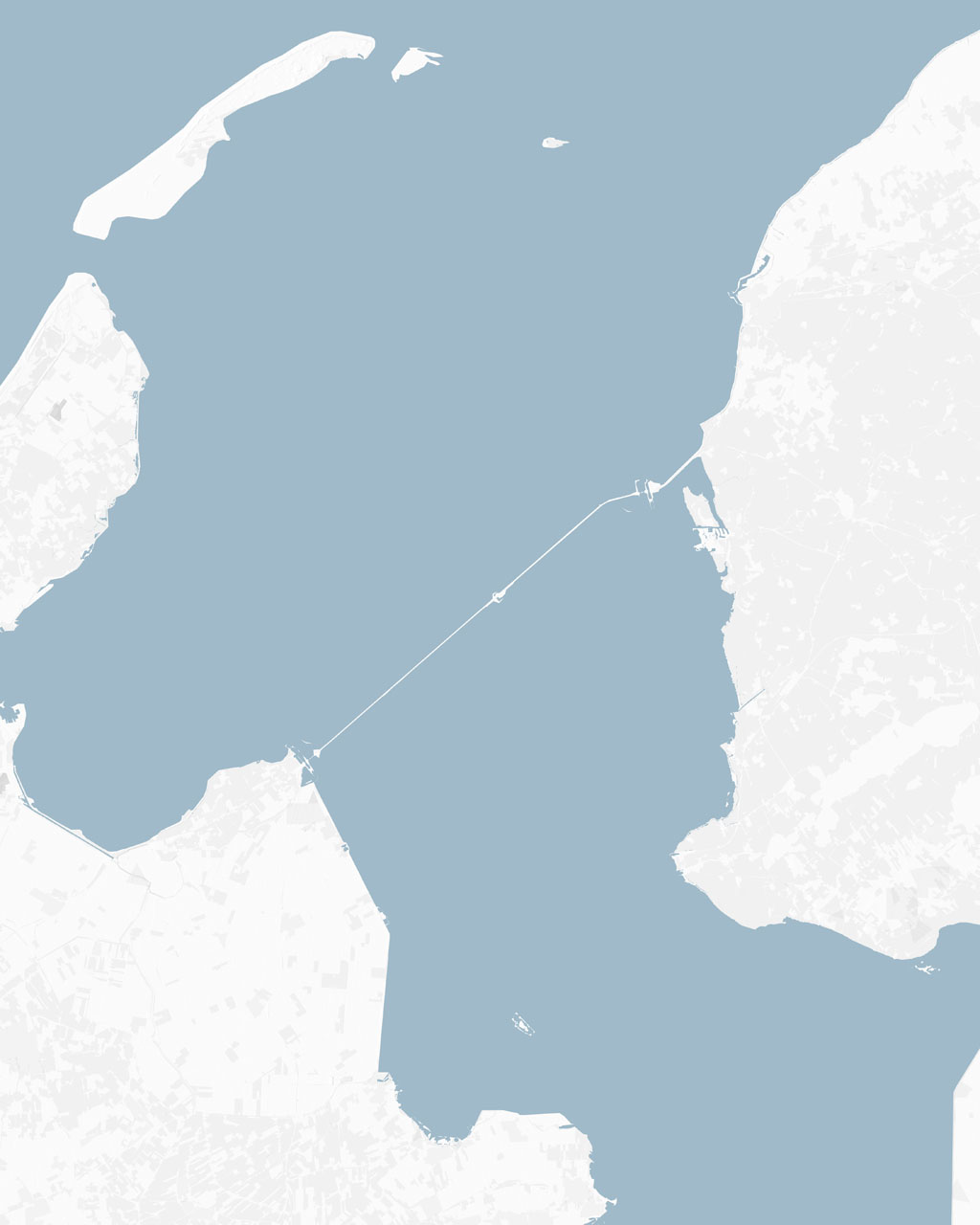
The Afsluitdijk is a 32-kilometer-long protective dam built in the 1930s in the Netherlands. It separates the North Sea from the Zuiderzee, a bay that once covered an area of around 5,000 square kilometers and has since become a smaller inland body of water known as the IJsselmeer.
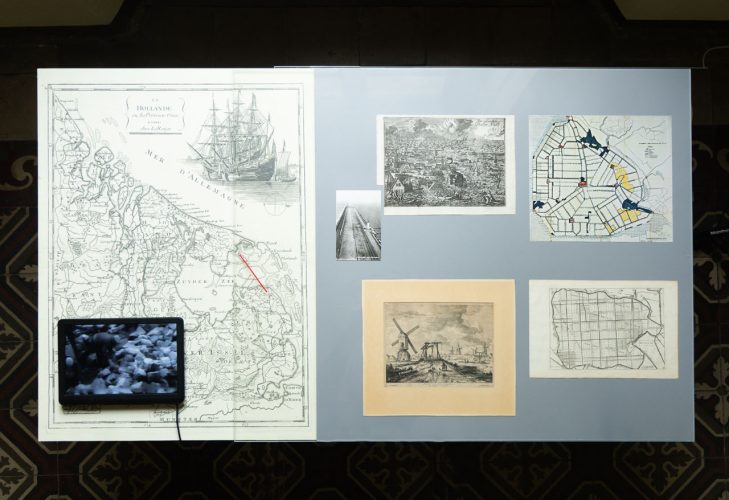
The Zuiderzee was formed between the 12th and 13th centuries following violent storm surges that flooded vast stretches of land, creating a natural access route from the sea to what would later become the port of Amsterdam. As early as the Middle Ages, the Dutch began protecting themselves from floods by building dikes and canals. Windmills were used to pump out water and reclaim land. In this way, a grid-like landscape of dikes, canals, and low-lying plains emerged, known as polders.
In 1986, industrial-scale drainage operations in the IJsselmeer led to the creation of the province of Flevoland, which covers 2,500 square kilometers and is now home to approximately 460,000 people.
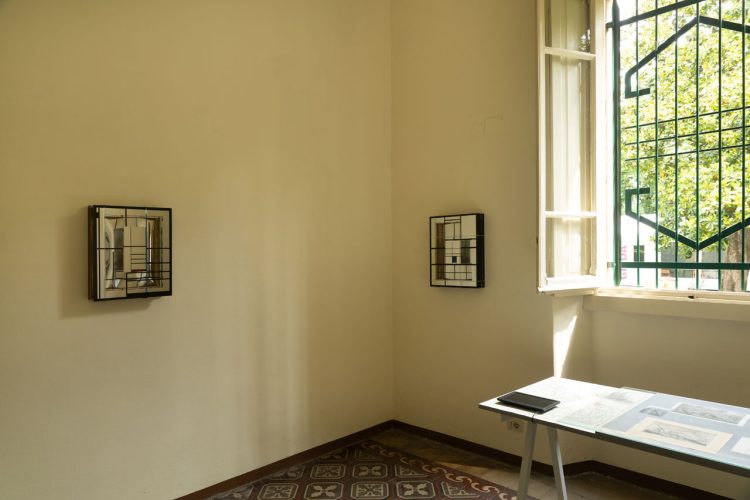
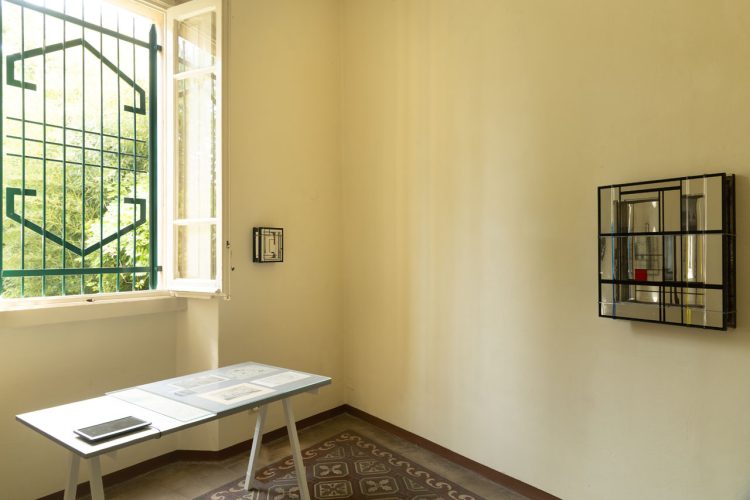
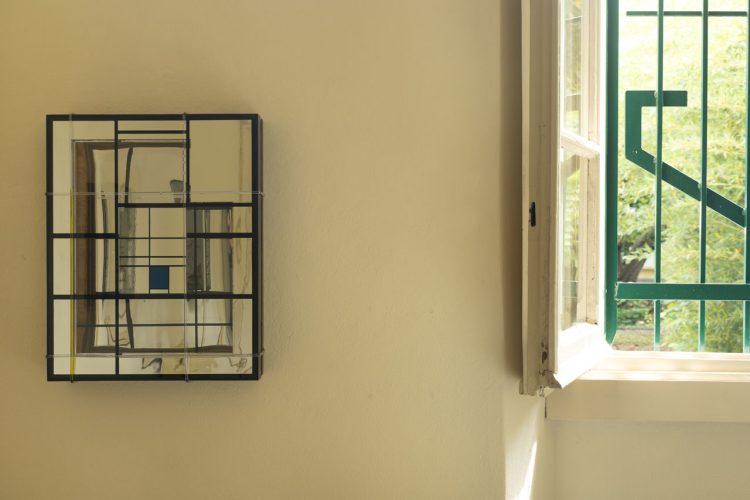
In these works, the geometric mapping of the polder landscape is placed in relation to the Zuiderzee, a bay that no longer exists today. Elements of 20th-century abstract art enter into a painterly dialogue with 17th-century maritime painting. The works in this series are distinguished by complex, layered compositions. In the foreground, individual PVC tubes filled with colored water from the IJsselmeer stretch across the image surface. Behind them lies a glass panel featuring an abstract composition in the style of Piet Mondrian, whose geometric arrangement also recalls the cartographic grid structures of polder landscapes, as seen in the map displayed on the table. The unpainted sections of the glass surface reveal a rippled mirror mounted behind it. This mirror reflects reproductions of 17th-century seascapes, applied to the back of the glass panels and inserted into antique frames. The three-dimensional wooden frames create a pronounced sense of depth, while the distorted maritime scenes appear as fragmented and fleeting memories of a bygone era.