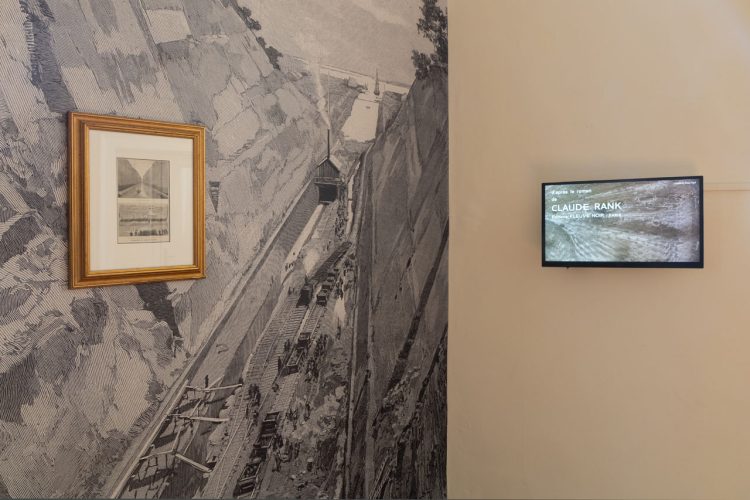
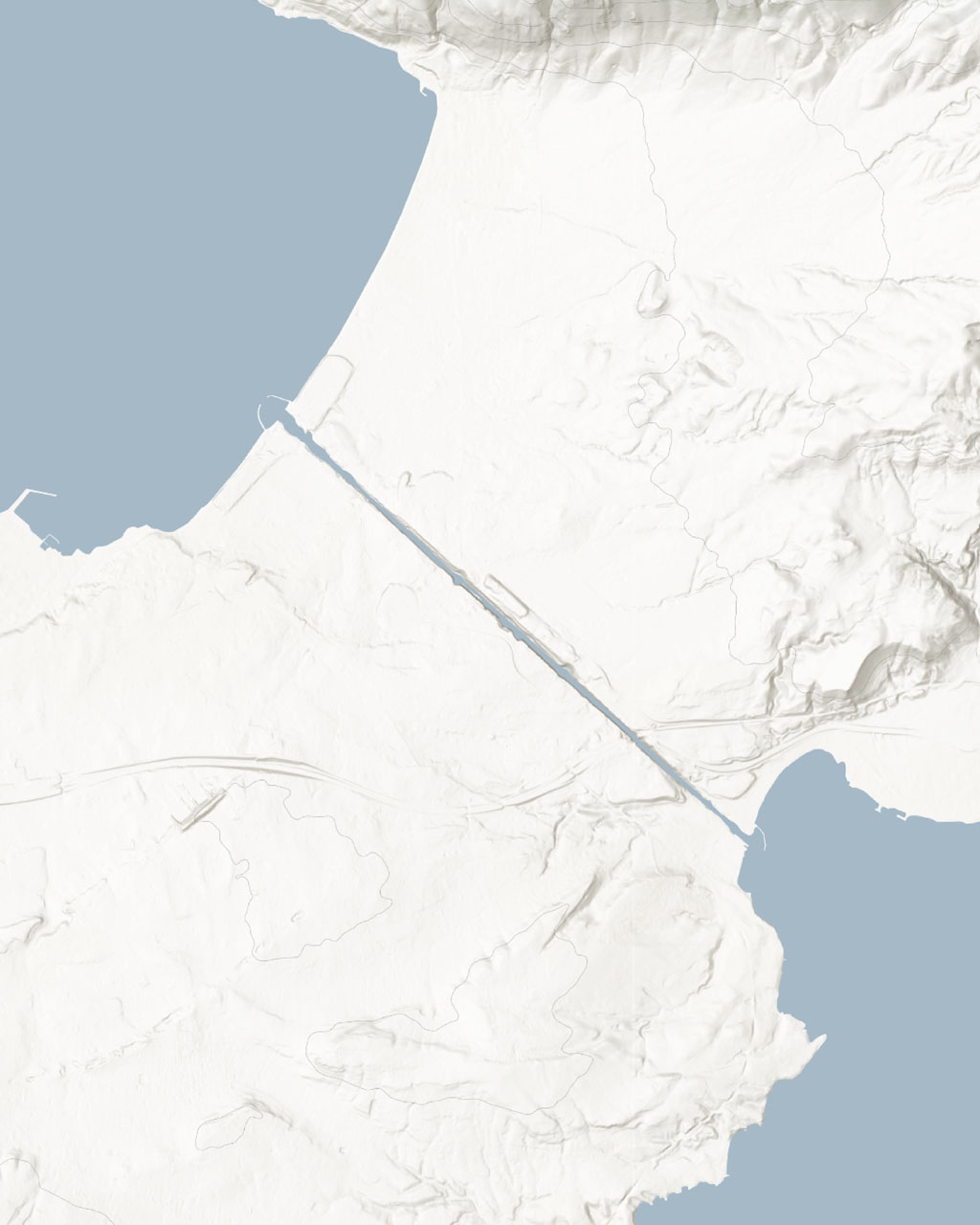
The Corinth Canal is an artificial canal built in Greece to connect the Gulf of Corinth in the Ionian Sea with the Saronic Gulf in the Aegean Sea. It cuts through the narrow Isthmus of Corinth and separates the Peloponnese from mainland Greece, effectively turning the peninsula into an island.
In antiquity, several attempts to excavate a canal failed. The project was only revived in the second half of the 19th century. In 1893, the canal was completed; it is 6.4 kilometers long and 24 meters wide, but today it is too narrow for many modern ships to pass through.
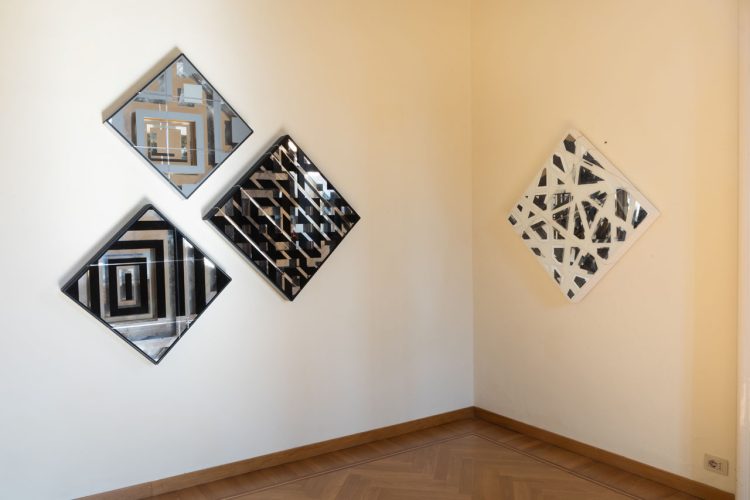
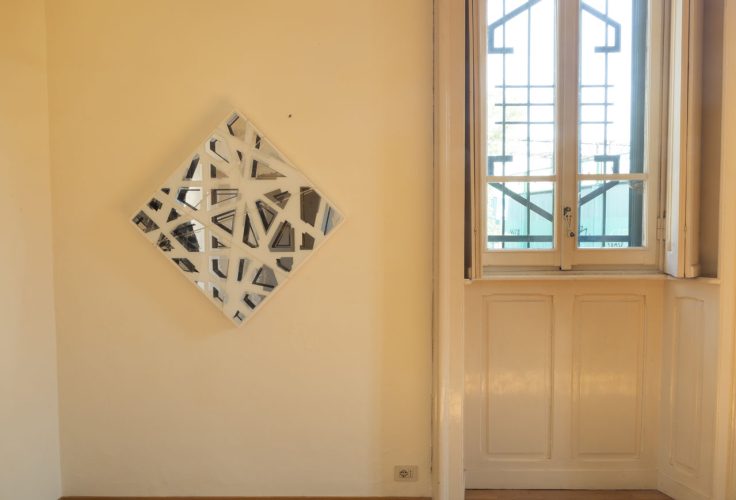
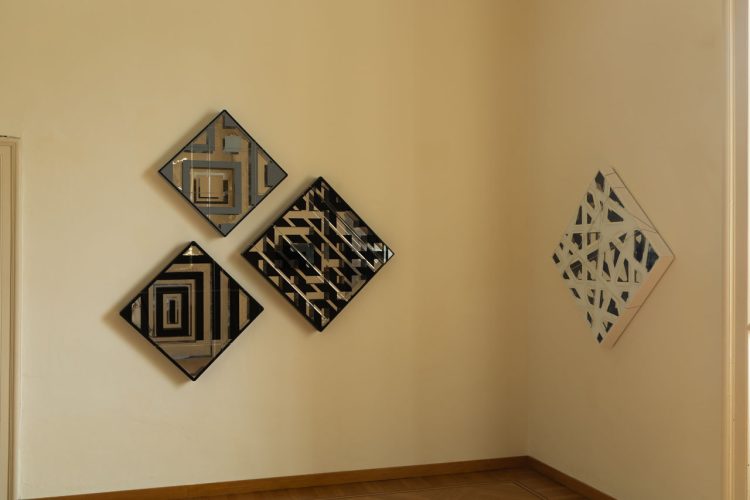
In one work from this series, the surface is covered with a network of PVC tubes filled with seawater from the Corinth Canal. Beneath this network, a glass panel is painted halfway with geometric motifs. Through the unpainted areas, a mirror mounted at the base becomes visible; as the viewer moves and changes perspective, the mirror suddenly reflects a black-and-white satellite image of the Corinth Canal and a blurred early 19th-century landscape painting of Corinth, placed within an antique three-dimensional frame.
The visual effect arises from the fact that both the landscapes and the frame are mirrored behind the abstract design. Front and back, reflection and motif, abstraction and landscape merge into a single unified image.