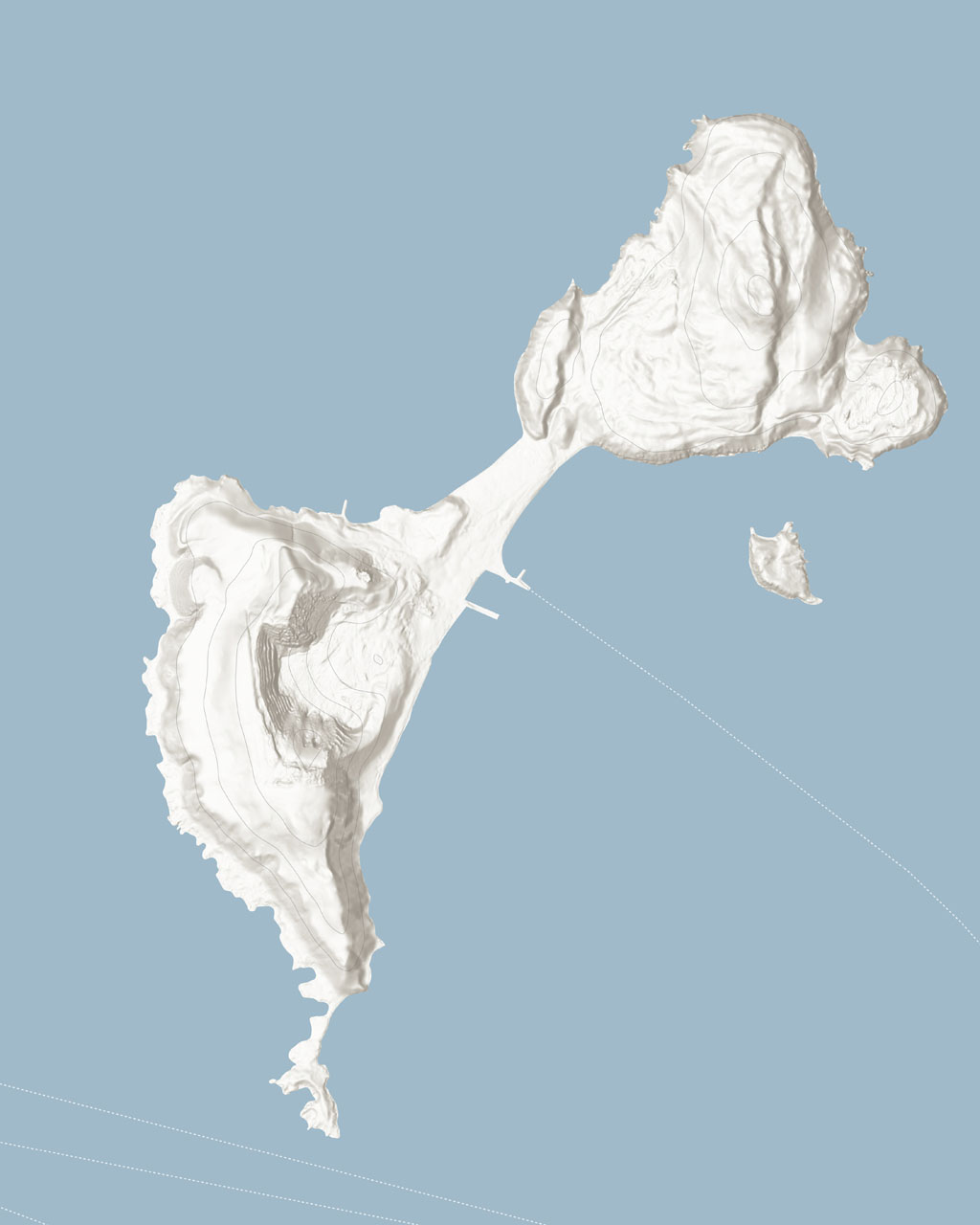
Every year, between 4.8 and 12.7 million tons of plastic end up in the world’s oceans. This represents a massive problem, since the complete decomposition of plastic can take anywhere from several hundred to thousands of years. Based on a new calculation model, scientists have estimated that approximately 17,600 tons of plastic enter the Mediterranean Sea alone each year. Of this amount, 3,760 tons float on the surface, around 2,800 tons sink to the seabed, while the remaining portion is carried onto beaches. Weather conditions and tides break the plastic down into micro-particles, which then mix with the sand. In 2020, Robert Gschwantner collected particles of plastic, sand, and seawater from a beach on the small Greek island of Gyali.
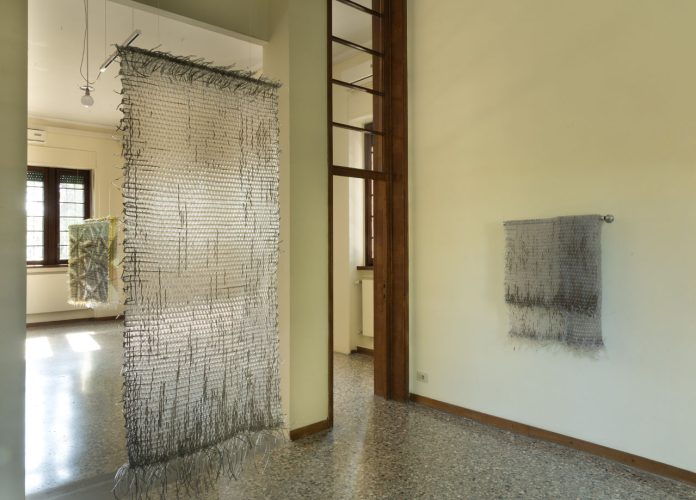
The artist then injects this material into a handwoven carpet made of PVC tubing, which, thanks to the seawater, takes on a glass-like appearance. Trapped air bubbles, knots, irregularly distributed filaments, and overlapping sections allow light to pass through in different ways, generating shadows, undulations, and varying degrees of transparency. Inside the tubes, the sand settles within the seawater, while the plastic particles rise and become lodged together. The result is a random pattern. Beside the carpet, a screen displays images documenting the collection of the materials and the process of creating the artwork.