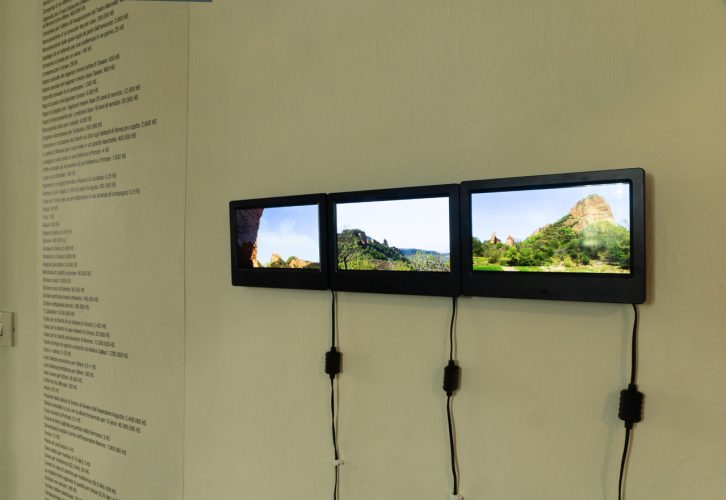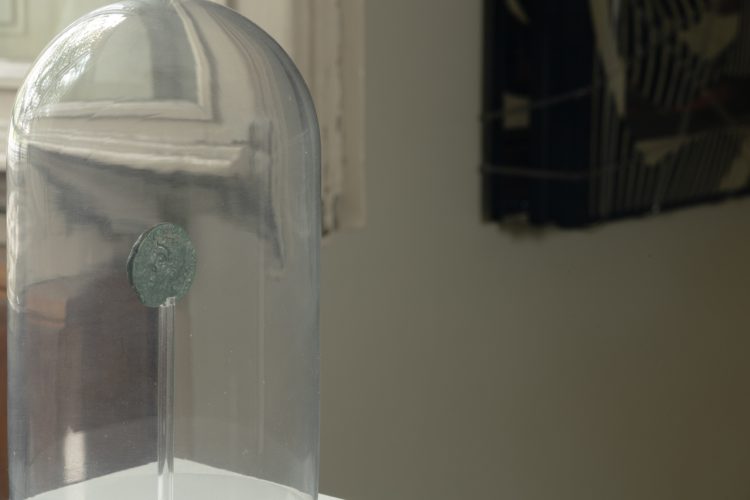
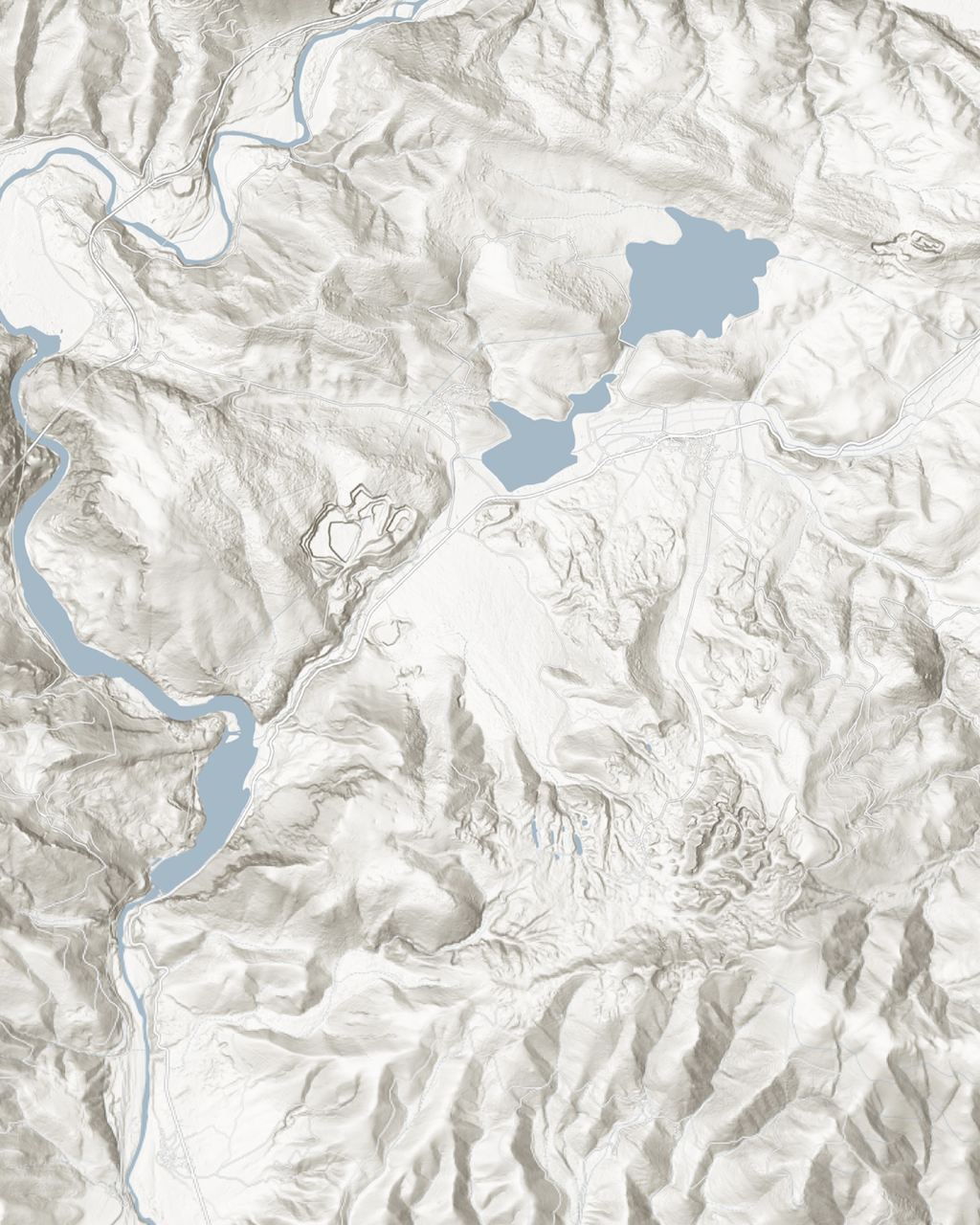
In northern Spain, at Las Médulas, there are small lakes and ponds surrounded by bizarre mountain peaks. These are not natural phenomena, but rather the remains of a landscape shaped 2,000 years ago by the Romans, because this was once the largest gold mine in the empire. The Romans invented a mining technique they called ruina montium, similar to modern fracking. For three centuries, tens of thousands of miners excavated tunnels through the mountains, while artificial reservoirs were built on the higher slopes. Huge masses of water were channeled into these tunnels until the pressure caused the rock to explode, releasing sediments from which gold was then extracted. The gold of Las Médulas made it possible to finance Rome’s wars of conquest and strengthened its economy. The artist evokes this history through the presence of a sesterce coin, possibly originating from Galicia, identifiable by the Celtic labyrinth on one of its two sides, along with a list of commercial values from Imperial Rome. The monetary crisis that erupted in the 3rd century coincided precisely with the exhaustion of the mine.
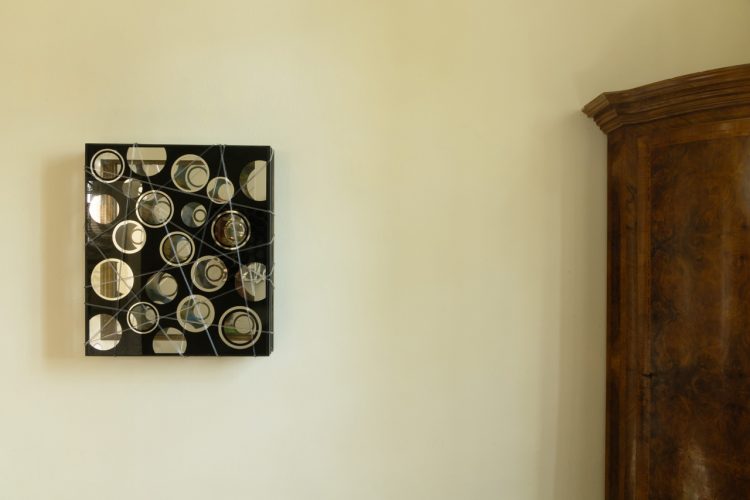
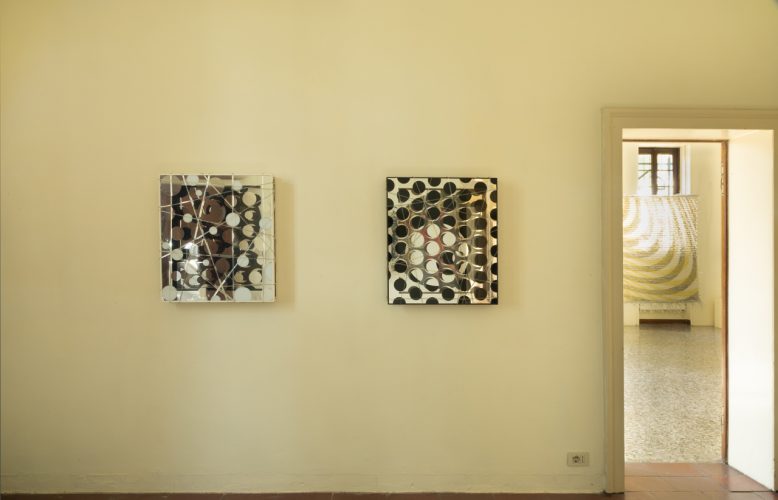
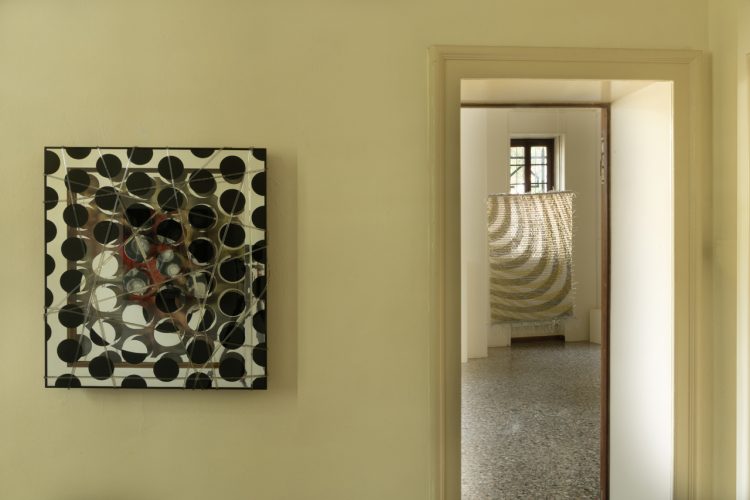
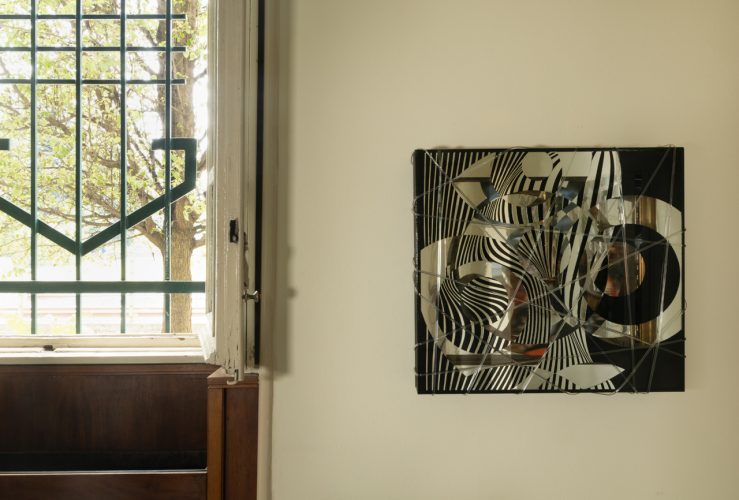
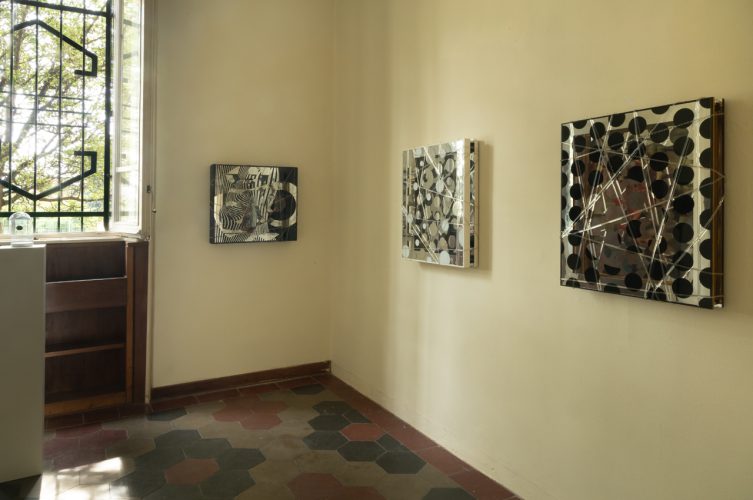
The works in this series are composed of multiple layers. In the foreground, a network of PVC tubes crosses the image support. The tubes are filled with a mixture of colored glycerin and water taken from Lake Carucedo at Las Médulas. Directly behind them is a sheet of glass, half-covered with an abstract geometric pattern inspired by the shapes of the mountains altered by the Roman intervention. The unpainted areas reveal a mirror mounted in the background. As the viewer changes perspective, the mirror reflects an antique frame within which the image of ancient paintings can be glimpsed. The subjects of the paintings refer to episodes from Greek mythology related to gold, including the stories of Jason and the Golden Fleece, and of King Midas. The appearance of the mythological scene results from the fact that it is located on the reverse side of the abstract surface. Front and back merge into a complex and unified image.
A particular gold extraction technique also existed in ancient Colchis, a region located east of the Black Sea. Gold dust was separated from rivers using sheepskins as filters: the gold particles became trapped in the dense wool. This technique entered Greek mythology through the tale of the Argonauts and their quest for the Golden Fleece. The Golden Fleece was the skin of Chrysomallos, a golden ram capable of flying and speaking. The Greek hero Jason led an expedition to Colchis to steal the Golden Fleece. In antiquity, it was widely believed that Jason’s expedition was what we would today describe as an act of violent industrial espionage.
The origin of the gold in the river is instead explained by the myth of King Midas: the king wished from Dionysus that everything he touched would turn to gold. But when food, drink, and even his daughter transformed into gold, he begged to be freed from the curse. He was instructed to bathe in the Pactolus River, a mythical explanation for the gold-bearing richness of that river.