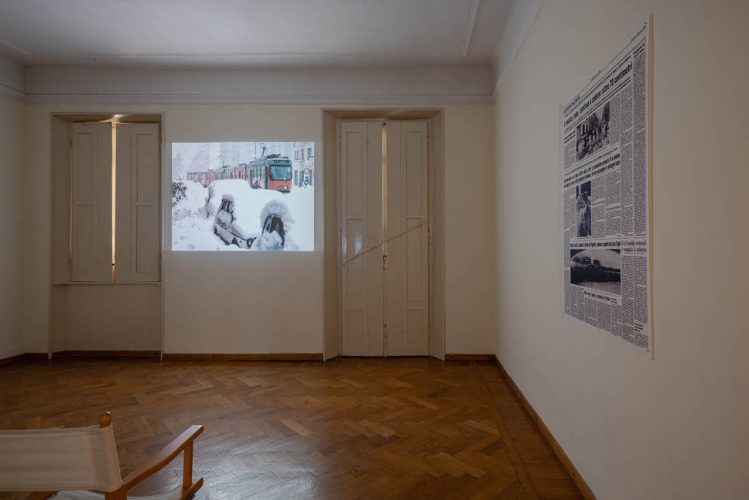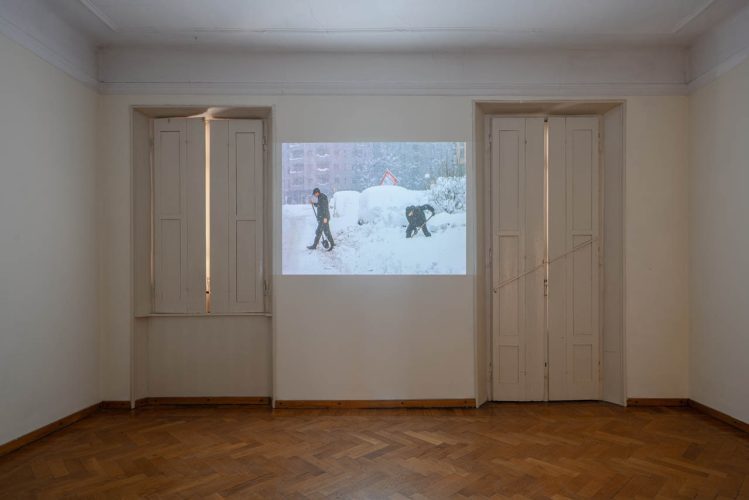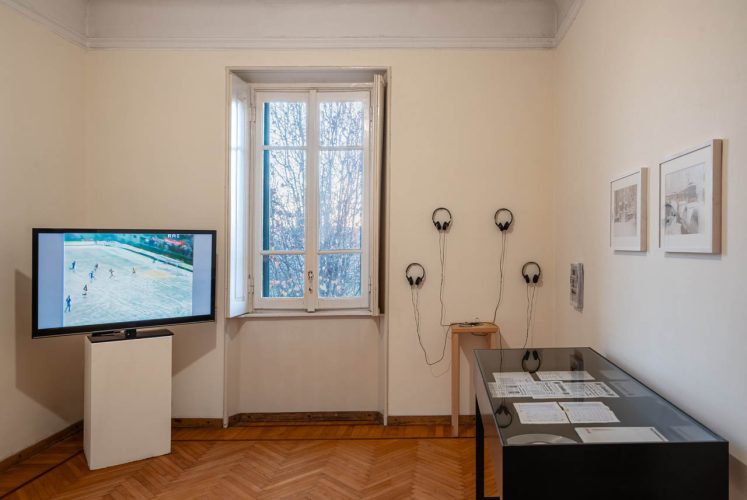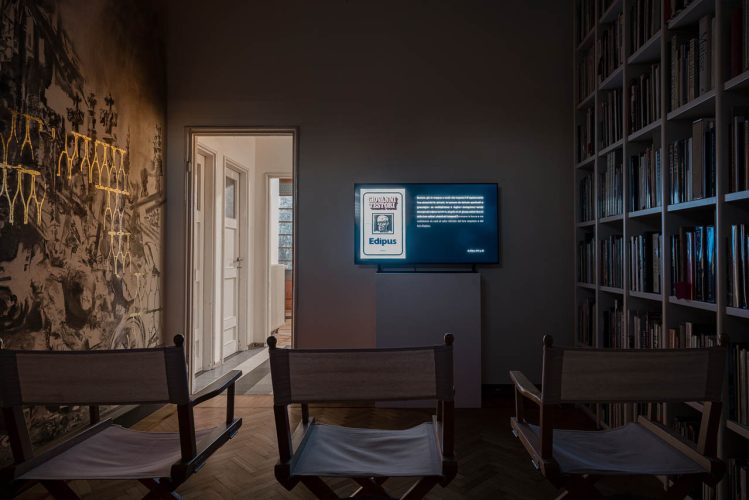
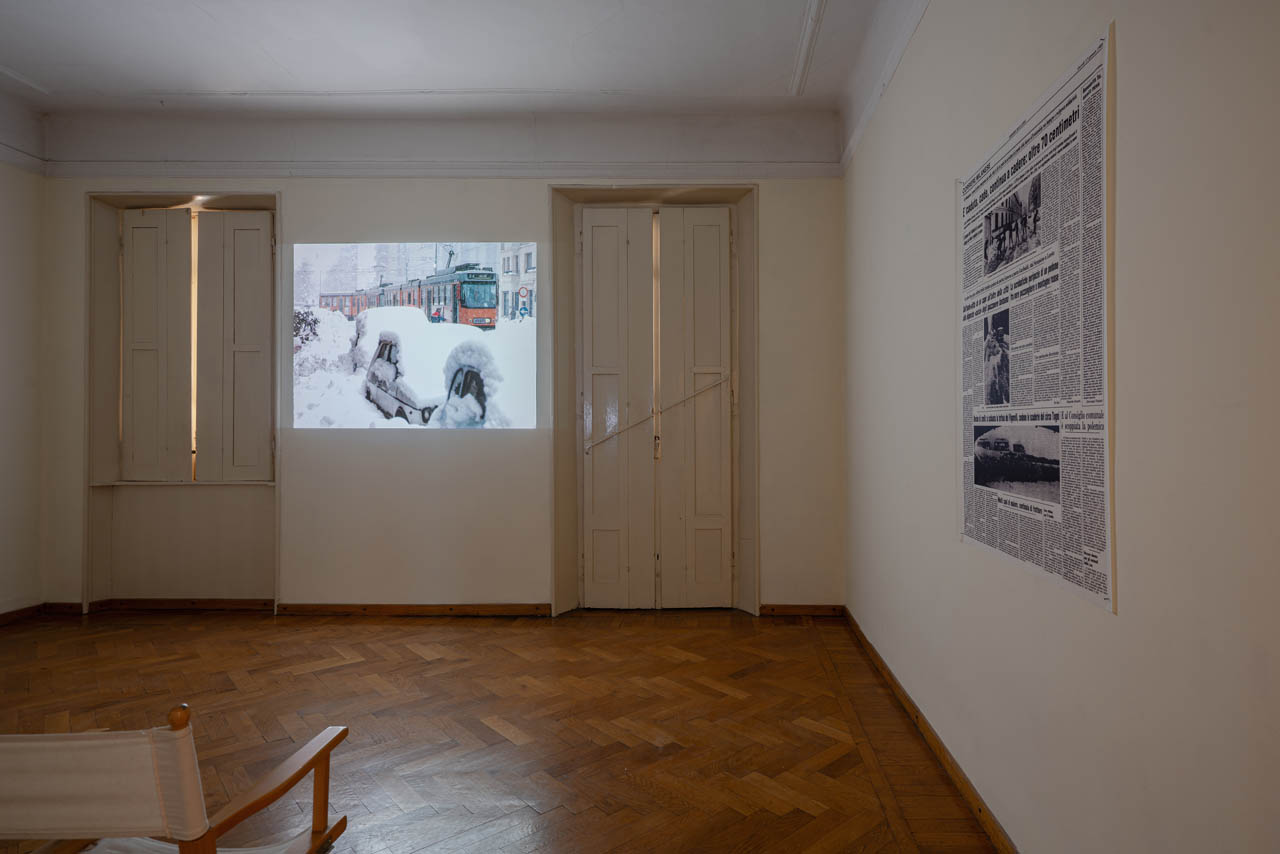
It is up to two works by Luca Campestri to act as a visual and poetic connection between the two floors of the house for the continuation of the exhibition. Initial spark and at the same time the conclusion of the route, the snowfall of 1985 is the protagonist of the preparation of the first floor. The article that Testori dedicated to that event – read, on display, by Roberto Trifirò – dialogues with the unrelead slides by photographer Mario De Biasi that portrayed the snowy Milan: immobilized and at the same time contrasting. Born in 1923 as Testori, in 1985 De Biasi was no longer the “professional” photojournalist who traveled the world for “Epoca” and could shoot for the personal need and genuine pleasure of portraying the world around him: without commissions, without customers, without stereotypes. Established himself as one of the great names of Italian photographic neorealism, he devoted himself in recent years also to technical experiments and to some emotionally connoted series, because they are dedicated to places and subjects of the heart, such as certain Milanese glimpses or monuments. With his camera he turned, therefore, in the days of the great snowfall, through streets, parks and squares, making them protagonists of iconic images.
The refined and authorial look of De Biasi and Testori then leaves room for the chronicles of those days and the memories of those who lived and interpreted them in the following years. The exceptionality of the event, in fact, made it the protagonist of reports, television reports and live school topics, but also of projects such as Zero – or the famous snowfall of 85, an album that Bluvertigo published in 1999, almost 15 years after the event.
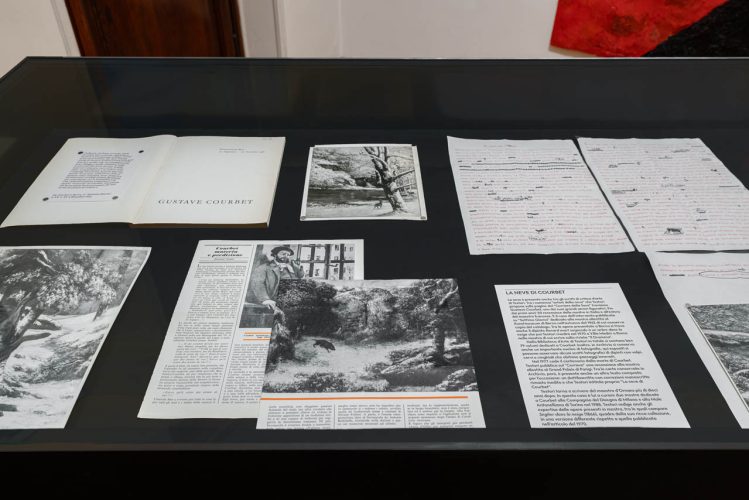
The attention of Testori per la neve, of which the 1985 editorial is the summa, is finally exploded in the last two rooms of the exhibition, curated by Alice Boltri, because the snow crosses poems, articles, letters and critical texts dedicated to the artists he loved, testifying to the filial relationship between the author and this element capable of bringing together nature and poetry. Therefore, a lunge on Gustave Courbet, one of the most beloved painters by Testori, at the center of a crossroads between deer that fight for life in the winter snows and become a symbol of overwhelming love for Alain Toubas: between letters and manuscripts up to the Triumphs. Forever, as Alessandro Bandini’s extraordinary monologue shows in these months at the theater.