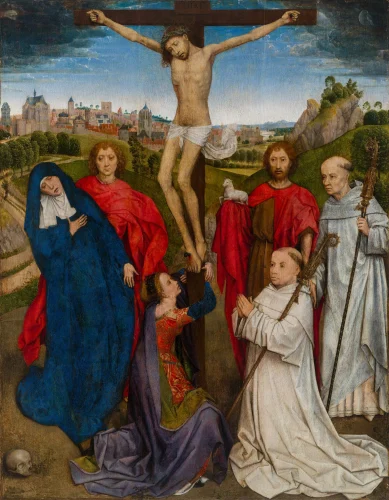
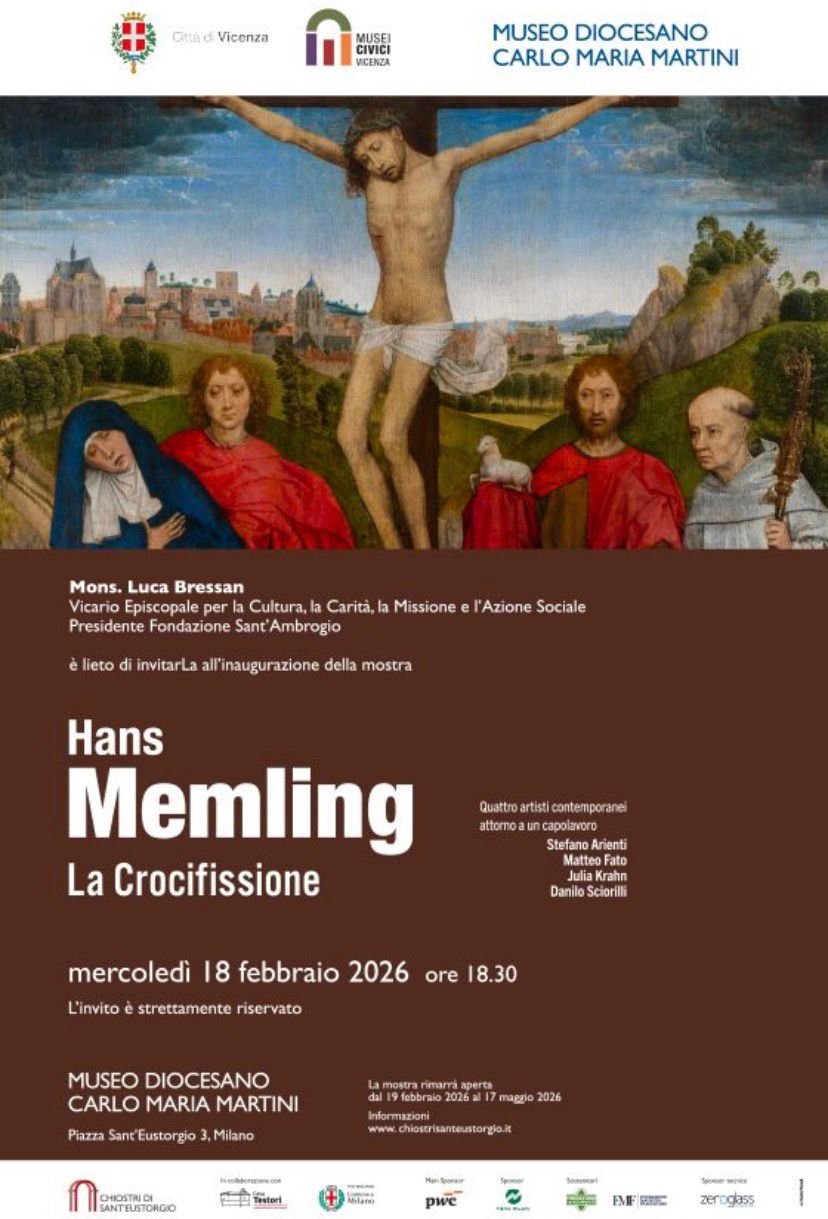
On the occasion of Lent and Easter, the Diocesan Museum of Milan presents an exhibition centered on The Crucifixion by Hans Memling (Seligenstadt, Germany, c. 1435/1440 – Bruges, 1494), dating to around 1467–1470 and on loan from the Museo Civico di Palazzo Chiericati in Vicenza.
Memling’s work depicts Christ Crucified at the center, surrounded on the left by Saint John the Evangelist, who supports the grieving Virgin, and Mary Magdalene, kneeling at the foot of the cross. On the opposite side stand Saint John the Baptist, holding a lamb, and Saint Bernard of Clairvaux, the patron saint of the commissioner, the Cistercian abbot Jan Crabbe (1426–1488), portrayed kneeling in the foreground.
In the background, a fairy-tale-like hilly landscape unfolds in a bird’s-eye view, rendered with the meticulous detail typical of Flemish painting. The bright, enamel-like colors, the analytical rendering of the figures’ faces, and the sharp, crisp outlines of the draperies recall the models of Rogier van der Weyden, of whom Memling was most likely a pupil. The grandeur of the landscape and the pathos of the figures on the left reveal the artist’s distinctive traits, which would later evolve toward gentler and less dramatic forms than those of his master.
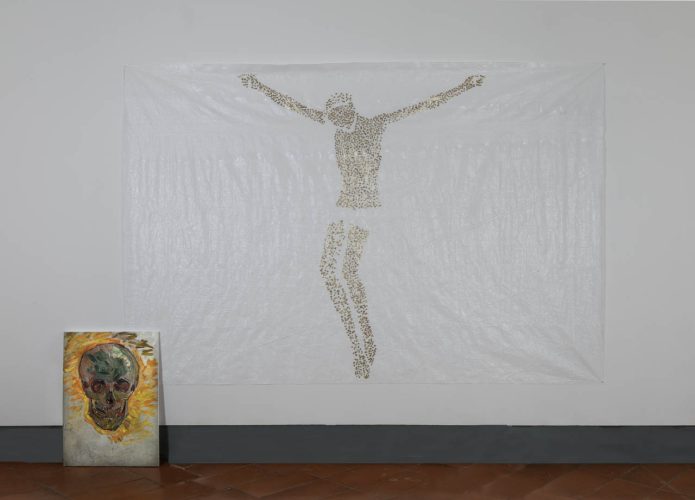
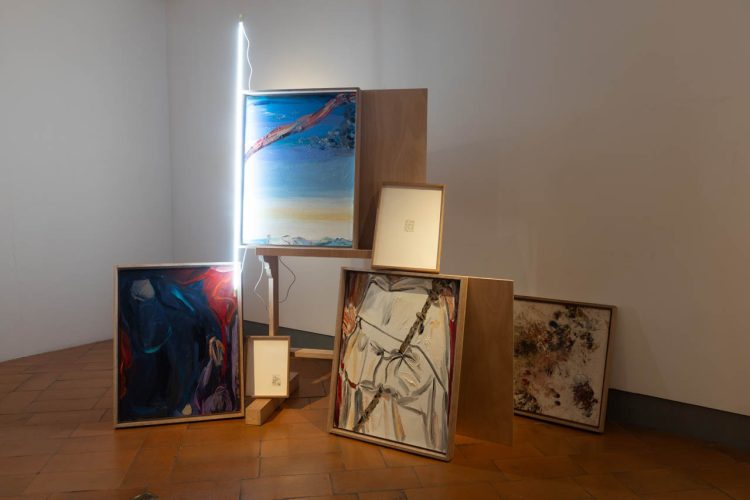
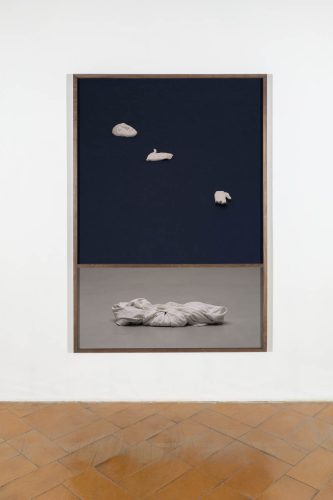
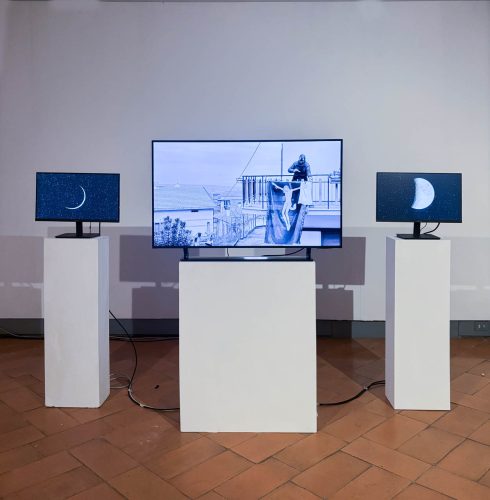
The works of the artists invited to engage in dialogue with Memling’s masterpiece are characterized by the use of different visual languages. Stefano Arienti (Asola, 1961) offers a reflection on the theme of the Crucifix, the visual and symbolic axis of Memling’s work. Matteo Fato (Pescara, 1979) presents a painting on canvas conceived as part of an installation in which the easel, constructed by the artist, is an integral element. Julia Krahn (Jülich, 1978) proposes, through a photographic diptych, an identification with the figure of Mary beneath the cross. Danilo Sciorilli (Atessa, 1992) works on a triptych of videos, centering on images from a performance created in his hometown.