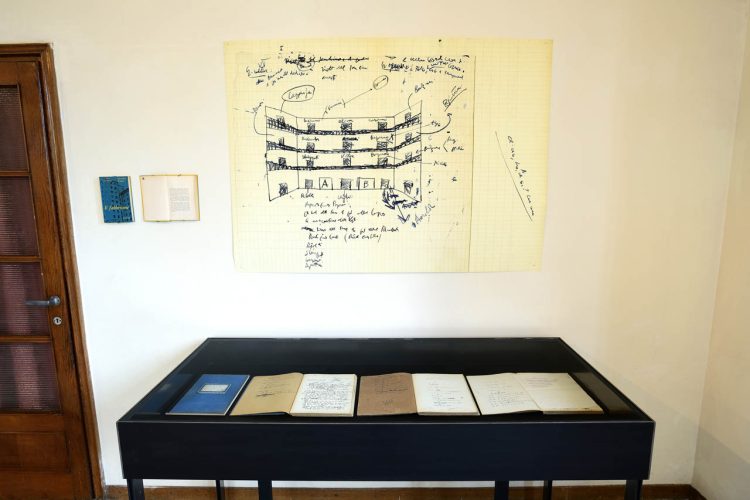
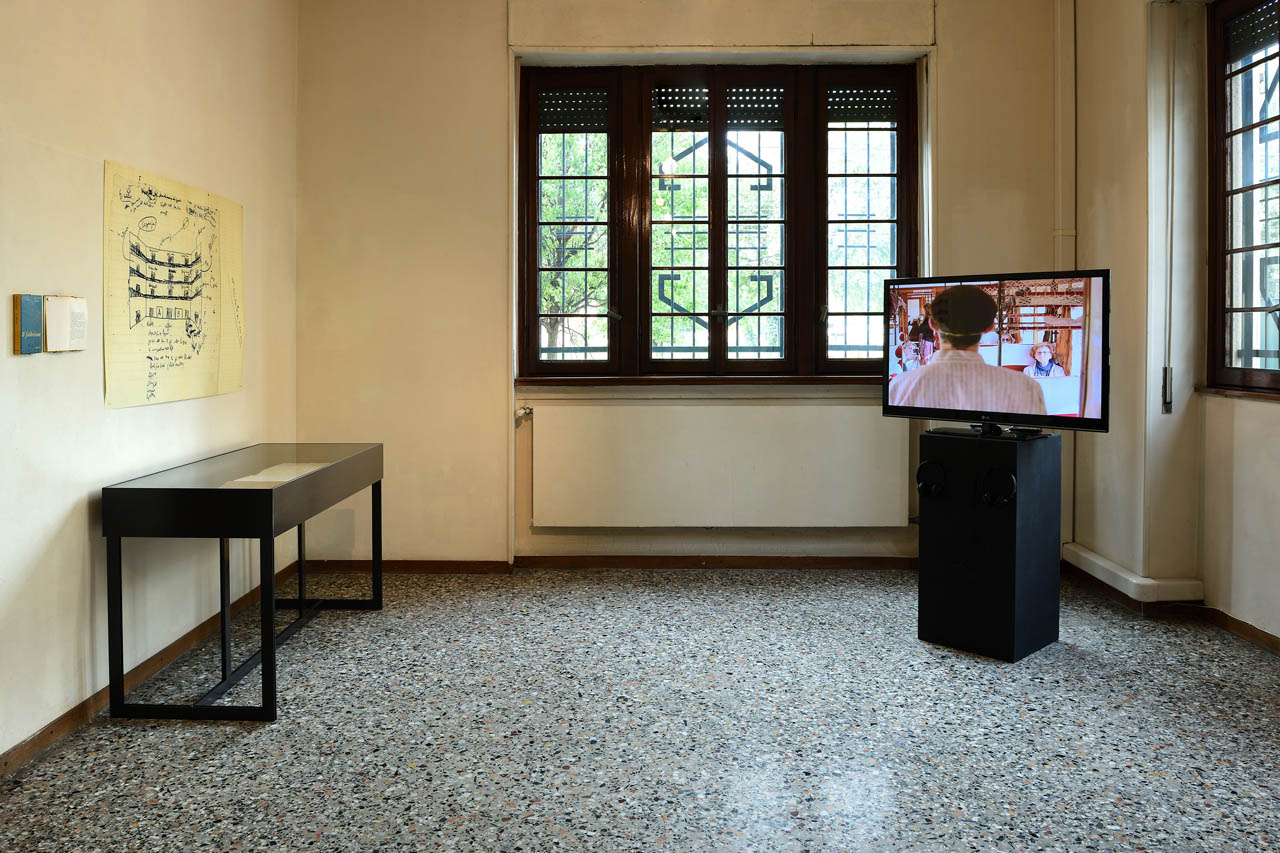
The Fabbricone was a casa di ringhiera—a prototype of public housing—built at the end of Via Aldini. In the notebook of his manuscript, Testori not only recounts its history through the memories of its protagonist, Redenta Restelli, but also draws it in great detail, indicating the homes of the characters in his epic.
“Born and raised in that area, Redenta remembered everything about the Fabbricone, and she remembered it with the precision and strength of her great memory… Here are the days when, on what was then nothing more than a meadow, she ran to play with her friends. Here are the Sundays when, with her father, mother, and uncles, she went to see the progress of what had by then become the main event of the neighborhood. A well-deserved title, moreover, since it was the first real public housing building that, in the district, rose up close to the farmsteads… Each apartment had been equipped with its own sink and toilet. And was that not a lot, at that time, nineteen twenty-three? Yet the owners—or rather the consortium, since they did not live there—year after year let it go to ruin, and it fell into disrepair.”
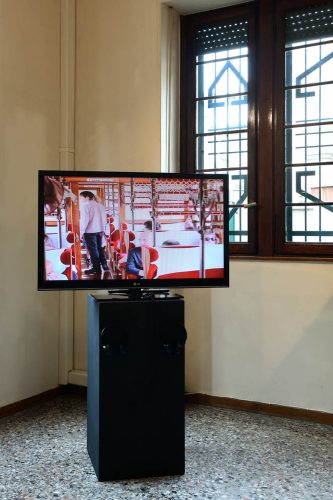
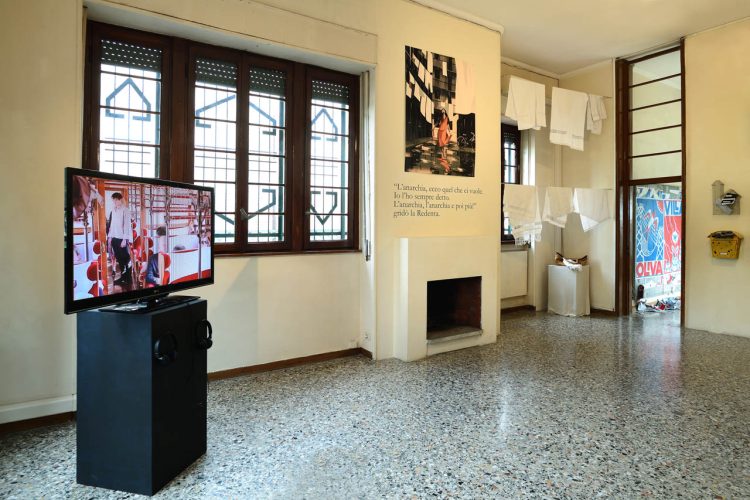
From time to time, the sound of thunder from a storm breaks into the room—the foreboding storm of the opening page of Il Fabbricone.
“Shutters slamming. Sheets, shirts, and underpants flapping on the lines. Great commotion on the balconies. ‘Come inside! Hurry, hurry, the end of the world is coming!’”